
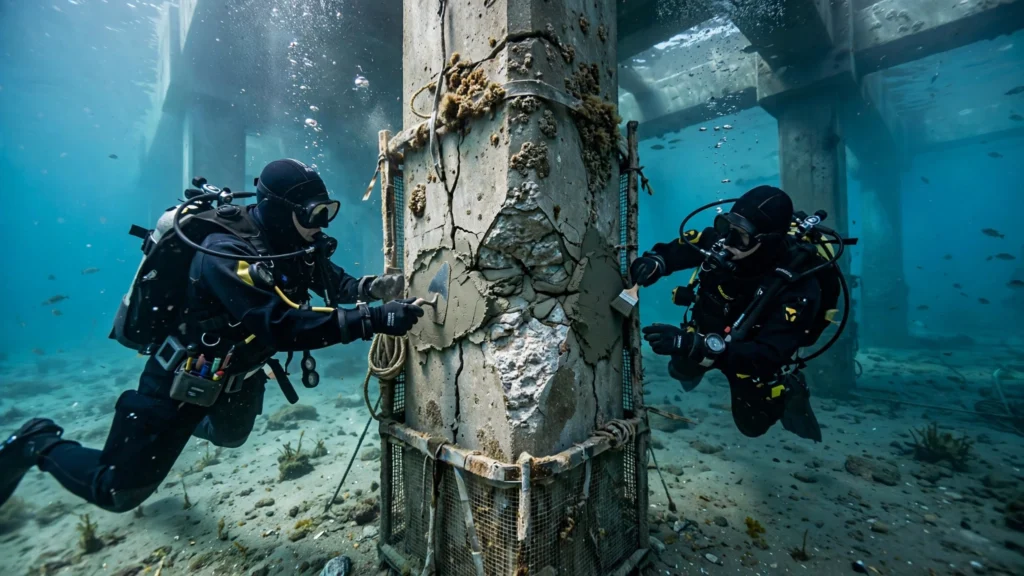
Underwater Concrete Repair plays a critical role in protecting marine structures, bridges, dams, ports, and offshore platforms. Water exposure accelerates concrete deterioration through corrosion, erosion, and chemical attack. Without proper repair methods, structural damage can increase maintenance costs and safety risks. We rely on proven engineering practices, specialized materials, and qualified diving teams to restore concrete while minimizing downtime and extending service life.
Successful Underwater Concrete Repair requires careful planning before any material enters the water. Engineers inspect damage, identify deterioration causes, and select repair systems that perform under submerged conditions. Modern underwater grouts, epoxy compounds, and hydraulic cement products provide durable solutions when installed correctly. Combining quality materials with experienced technicians delivers long-lasting repairs that meet structural performance requirements.
Why Underwater Concrete Repair Matters
Concrete structures below water face constant environmental stress. Saltwater, moving currents, freeze-thaw cycles, and abrasion gradually weaken concrete surfaces. Steel reinforcement may corrode, causing cracking, spalling, and reduced structural capacity. Early intervention prevents localized damage from becoming a major structural concern.
Common Causes of Concrete Damage
Professional inspections typically identify several deterioration mechanisms affecting submerged concrete. Understanding these causes helps engineers select the most effective repair strategy.
Common causes include:
- Chloride-induced steel reinforcement corrosion.
- Sulfate and chemical attack.
- Impact from vessels and floating debris.
- Scour around foundations.
- Freeze-thaw deterioration.
- Poor original construction quality.
- Long-term abrasion from sand and sediments.
Industry studies by organizations such as the American Concrete Institute (ACI) show that corrosion remains the leading cause of reinforced concrete deterioration in marine environments. Addressing the root cause significantly improves repair durability.
Inspection Before Underwater Concrete Repair
Every successful Underwater Concrete Repair project starts with a detailed inspection. Divers, remotely operated vehicles (ROVs), sonar imaging, and underwater cameras document damage before repairs begin. Engineers compare inspection results with original design drawings to determine repair priorities.
Essential Inspection Methods
Inspection combines visual observations with non-destructive testing whenever possible. These techniques help determine the extent of deterioration without removing sound concrete.
| Inspection Method | Primary Purpose | Key Benefit |
|---|---|---|
| Diver Visual Inspection | Identify cracks and spalling | Immediate assessment |
| Underwater Photography | Document defects | Permanent records |
| Sonar Scanning | Map submerged surfaces | Large-area coverage |
| Ultrasonic Testing | Evaluate internal defects | Non-destructive analysis |
| Core Sampling | Verify concrete strength | Laboratory confirmation |
Experienced structural engineers review inspection data before developing repair specifications. This planning stage reduces unexpected problems during construction.
Choosing the Right Repair Materials
Material selection determines the long-term performance of Underwater Concrete Repair. Products must bond effectively in wet conditions while resisting chemical exposure, pressure, and abrasion. Engineers choose repair materials according to structural requirements and environmental conditions.
Recommended Repair Materials
Modern repair systems provide improved durability compared with older repair methods. Manufacturers continually test products for underwater performance and long-term strength.
Common repair materials include:
- Hydraulic cement.
- Anti-washout concrete.
- Epoxy injection systems.
- Cementitious repair mortars.
- Polymer-modified concrete.
- Underwater grout.
- Fiber-reinforced repair compounds.
According to engineering testing, anti-washout admixtures significantly reduce cement loss during underwater placement. This improves strength development and minimizes environmental contamination.
Best Installation Practices
Proper installation remains just as important as selecting quality materials. Skilled commercial divers and contractors follow strict procedures that maintain repair quality while protecting surrounding structures. Careful preparation increases bonding performance and extends repair life.
Key Steps During Installation
Surface preparation begins by removing marine growth, loose concrete, and deteriorated material. High-pressure water jets and specialized underwater tools create clean surfaces for bonding. Repair materials are then placed using tremie methods, pumps, or form-and-pour systems, depending on project requirements.
Quality control continues throughout installation. Engineers monitor placement, curing conditions, and material consistency. Documentation verifies compliance with project specifications and applicable engineering standards. This disciplined approach reduces defects and improves structural reliability.
Long-Term Maintenance and Monitoring
Completing Underwater Concrete Repair does not eliminate future maintenance needs. Regular inspections help identify new deterioration before significant structural damage develops. Preventive maintenance costs considerably less than emergency structural rehabilitation.
Building a Preventive Maintenance Program
Owners should establish scheduled inspections based on environmental exposure and structural importance. Marine structures exposed to heavy vessel traffic or aggressive saltwater require more frequent evaluations than freshwater facilities.
An effective maintenance program includes:
- Annual visual inspections.
- Scheduled underwater surveys.
- Crack monitoring.
- Corrosion assessments.
- Protective coating evaluations.
- Repair documentation updates.
- Structural performance reviews.
Engineering professionals often recommend digital inspection records to track deterioration trends over time. Historical data supports better maintenance planning and budget forecasting while extending infrastructure service life. Explore our latest insights in The Role of Wire Sawing in Bridge Demolition and Rehabilitation Projects.
Conclusion
Underwater Concrete Repair succeeds through accurate inspections, appropriate material selection, skilled installation, and ongoing maintenance. We achieve longer service life by addressing deterioration early and following recognized engineering practices. Investing in professional repair methods protects critical infrastructure, improves safety, and reduces long-term ownership costs through durable structural performance.